
As it turns out, The Underground City is not the crazy subterranean fantasy-land you’re probably imagining in your head when you think of an “Underground City.” In fact, a lot of it isn’t even subterranean, but it is definitely something worth checking out. It’s got miles and miles of commercial zones, hundreds of restaurants and shops, connects to several important locations in the city of Montreal. It’s basically a mall with no end to it, and acts as the commercial artery of the entire area. The place requires absolutely no tickets, so anyone can get in. It’s by far the best bit of shopping that we’ve seen all trip.
The next hour of the trip was dedicated solely to the Underground City, and we spent a lot of time just window shopping through the mall, finding a lot of really interesting souvenirs along the way. The place had all of your average shopping mall items, of course; but there were definitely plenty of uniquely Canadian things that really grabbed my attention.
One of the first shops we stopped by, to start, had a whole bunch of hats and shirts in it that it displayed on the outside to passersby’s that had this surprisingly entertaining message on it:
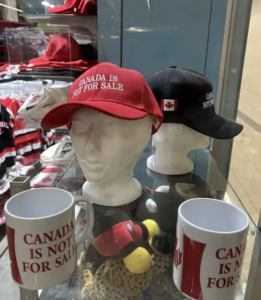
(I will definitely be drinking from this mug from now on)
Yeah, I guess it shouldn’t have come as much of a surprise, but there was quite a bit of merchandise here that just said “Canada shouldn’t be bought for the United States”. There were a lot of shops that sold uniquely Canadian products and souvenirs, some of them in French and the rest in English. There was a lot of pride that I could clearly see for their regional identity; that is, pride in being from Quebec. The pride in being Quebecker was about as strong as it was in identifying as New Englander.
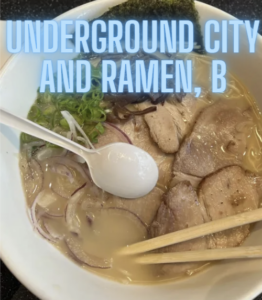
We continued to walk around the area for a while, surveying through dozens of shops as well as the occasional photo booth, playground for kids, or escalator. The next place on our list of experiences, however, was another ramen place we ended up eating at in the middle of the mall, called “Otto Ramen”.
A regular ramen place would’ve likely just earned a B-, and I was tempted to give this one a similar rating as there really wasn’t that much that made the taste very exceptional. However, I did end up deciding on a slightly higher rating than a mere average one for one crucial reason: the location.
This place was definitely not a regular mall, that’s for sure. There was something weird about this place just being a lot “larger”, like an endless maze of shops on every single side. The food court, the restaurants , and in some cases the shop sizes all felt a bit amplified by this “Underground City” place. I ended up choosing only a relatively mediocre score because shopping isn’t really much of my thing, but I definitely recommend coming to the Underground City if you are really into shopping.
Rating for Experience #24, Otto Ramen & Underground City, B
After we had our ramen, we headed back out and began walking to the nearest metro station to find our next attraction to take a visit to, and oh, boy, the next one was going to be one of the most memorable experiences of the entire trip. Firstly, however, we had to get through the twenty minute walk from the Underground City where we had lunch to the nearby metro station. Along the way, dozens of large buildings towered over us as we walked through the labyrinth of streets that the city had to offer, and they eerily reminded me of an American City. I probably could get the two mixed up if it wasn’t for the French signs and the Canadian flags.
Before we arrived at our next major attraction, we also inadvertently discovered a new one. We ended up walking into this very interesting “ring-structure” thing in the middle of the large street, which, although crowded, is a relatively unknown structure in the city and definitely an underrated one. It’s a very recent build; having only been created in just 2022 (which means this blog is almost as old as it is!) and boasts an impressive one hundred feet in size, which means you could probably fit my suburban American home in it.
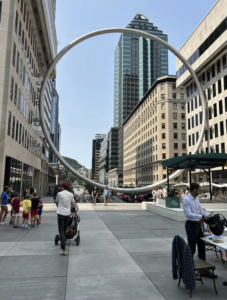
Seriously, this structure is way, way larger than it looks. You really just have to be there to believe how large it is, because it’s hard to exaggerate. Just look at what a normal person looks like compared to the rings; it’s insane!
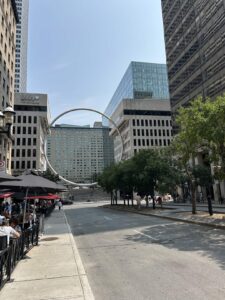
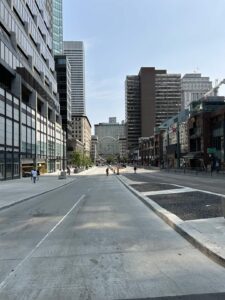
And it wasn’t just the ring that made this singular street memorable; the view itself was also really impressive. Behind it was a really good view of one of the grandest city streets I’d ever seen in my travels, and it was even better looking when you saw the greenery of the park that stood at the end of the road.
The metro station was at the end of this road, so we took one last pic of the ring from afar
And descended into the metro below. This time, we were on a much longer journey to an area a bit outside of the main part of the city. There was one interesting attraction we’d noted down before heading out for our day in Montreal and now had time to visit: this place was called the Bio Dome.
We ended up starting in what seemed like a relatively trivial place; it was just what seemed like a regular suburb just outside of the main city. A short walk away from the metro station, however, and we quickly realized that while we might not be in the main part of the city, we were by no means anywhere boring. The Bio Dome, as it turned out, is a zoo with a pretty large and grand “futuristic” architecture that showcases dozens of different animal species in their respective habitats. As someone who really likes ecology and biology, a place like this definitely piqued my interest. Our family was initially pretty reluctant to go in there, but upon hearing Casey’s and my (mostly me) pleas, they agreed and went to buy us tickets. It ended up being a minute before we could go in since we had to wait about a half hour after getting the tickets to actually enter, but once it was time we quickly found this was a place we wouldn’t soon regret.
The immediate lobby quickly set the stage for the exhibition’s nature-themed vibe, with these signs hanging up boldly on the walls (In both French and English, of course)
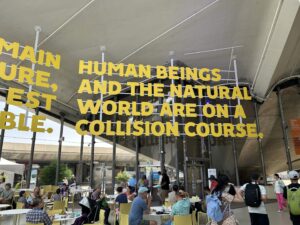
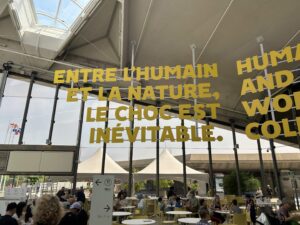
The interior of it, just like the outside, had this really futuristic and free-form design that looks straight out of the 2030s. And then, of course, you had the exhibitions themselves.
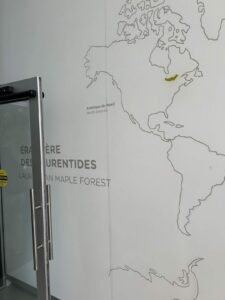
The first one focused on the wildlife on the coastline of a region in Canada called Labdrador. If you’re not familiar with that region, here’s what it looks like on a map (And yes, this is a visual taken directly from the walls inside of the building)
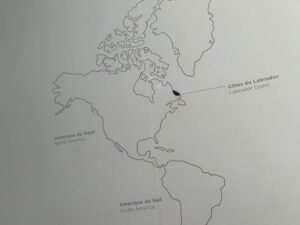
When we opened the door to the Labrador exhibition, the first thing we noticed was that this place didn’t just display the Labrador area, it also made you feel like you were actually there. While it had your typical zoo-glass enclosures as well as some pretty large spaces for everyone to run around and stare at the animals, we immediately realized that it was very cold; the place was definitely mimicking what Canada is like stereotypically. (Let me just say that this is NOT the case. Canada’s a really hot place in the summer.)
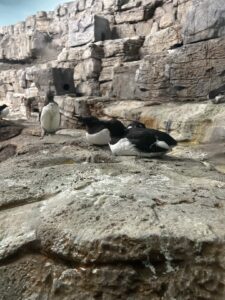
Anyway, the first enclosure that we ended up taking a look at while in Labrador was one for these penguin-like creatures called Atlantic Puffins as well as the Guillemot Marmette; there were a couple dozen in them in this rocky beach setting, swimming across the water or hanging out on the stony cliffs. Hundreds of little holes across the rocky beach were filled with feces that the little birds left. If you’re into birds or just want to see some cute animals, here ya go
The next enclosure that we looked through was a more tropical one, which covered animals that were mostly native to the Latin America region; think Panama, the Guianas, and parts of the Caribbean. As soon as we entered the carefully designed habitat, I immediately felt a much warmer atmosphere and could see all around me was nothing but jungles in all directions, like I was actually going on a hike in Costa Rica right now.
This enclosure just so happened to be more open and much larger in which dozens of animals could jump and fly freely through hundreds of feet of space. For a moment, I couldn’t see anything other than the vast jungle in all directions. Where were the animals?
Suddenly, my mom shouted my name in urgency. “Look up!” She pointed to something above us excitedly. Out of curiosity, I glanced up to find…
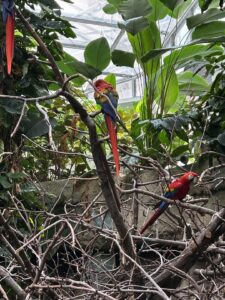
This wasn’t a trip to Canada anymore. Now we were seeing the wildlife of Brazil, perched up dozens of feet above us. The colorful eyed the hundreds of watching tourist eyes below on their branches, making the occasional chirp as it did. More and more animals native to Central America continued to appear. We soon found another enclosure for an alligator (which mostly stayed still as hundreds of people eagerly pointed at it from a distance)
The next habitat that we explored was an aquatic one; the first container of many that was filled with dozens and dozens of brightly colored fish. In addition to the several colored fish was also a snake which lived nearby, and was coiled up on the branches just above the water.
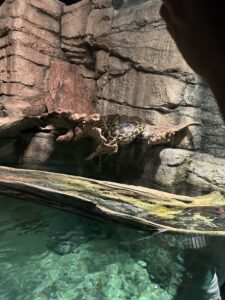
But then the exhibition led to somewhere quite interesting; there seemed to be a really dimly lit and spooky-looking cave up ahead. I curiously headed inside along with dozens of other tourists to see what the deal was, and we found a pretty interesting habitat inside; what was in there was an extremely dark habitat filled with rats and bats that was made to mimic a subterranean cave far below the surface. Shadows of bats flew across the little bit of light that illuminated the ground. Mice sprinted in every direction, disappearing out of sight just as quickly as they’d come. The place was far too chaotic to take a picture, so I ended up spending about four minutes just standing there, marveling at how exciting the environment inside of a dark cave really was.
After emerging from the cave, we found our next jungle-themed enclosures. This one contained two coexisting animals; a vulture which stood in a pit of hay, devouring it like there was no tomorrow and a tortoise that mostly just walked around casually, occasionally moving to take sips out of its water cups.
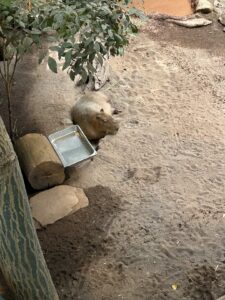
The final animal enclosure that I found in this exhibition was this adorable little capybara.
The third section of our trip to the Bio Dome included the wildlife in the region surrounding Montreal on a map.
If you’ve been thinking, Okay, but where’s the wildlife that’s actually Native to Montreal? This is the time.
(Kind of an off-topic rant, but this just came to my head. Why are the East Coast ants so big???? Ants where I’m from in California are so tiny and small, but the East Coast ants are like giants compared to them. My brother and friend who were also traveling to this area around the same time say that they also noticed that East Coast ants are a lot bigger)
Well, let’s actually go ahead and see what wildlife really comes from the Montreal area. And let me just say: this part of the world may not be as well-known for its wildlife as Alaska or Brazil are, but this exhibition showed me some really exotic creatures that will absolutely blow your mind.
The first couple animals that we saw weren’t too bizarre at first; just some good old turtles.
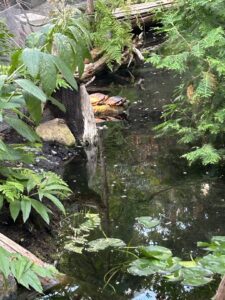
We also soon found that in the same body of water lived a few beavers who had a secret nest that was just out of view from the public who were watching from outside.
Or was it?
It turned out that there was actually a hidden camera inside of the beaver nest that displayed whatever the beavers were doing inside when they thought no one was watching. I actually took a video of one of these little guys munching on a plant inside of his home. It’s pretty cute 🙂
But where is the water without the fish? Many of the enclosures we encountered in this area also had huge schools of fish (that’s what you call them when they’re in a group) that all swim collectively in the same direction. While it was very satisfying to watch them move around as a unit (definitely more cohesive than my 4th grade robotics team, lol) none of the fish had an anatomy that really struck out and caught my attention.
There were also other smaller tanks, about ten-ish feet from end to end that displayed the strange types of plants that are native to the aquatic habitats on the Saint Lawrence River. Was this place as vibrant and colorful as the Barrier Reef?
Absolutely not. But the algae definitely made me rethink Canadian waters; I often thought the water-based habitats in this part of the world as barren, uninhabited, and pretty boring. But there are dozens of different species of plants in the area that live here, and they coat the ocean (lake? river?) floor like it’s a piece of artwork.
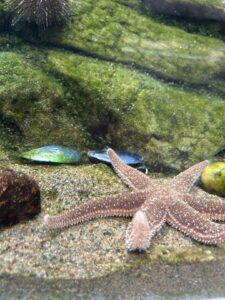
Another creature that I wasn’t expecting to be native to this region was starfish. I’m not sure why; maybe there was just a very tropical connotation to it, but it was definitely a surprise to be seeing starfish in these tanks of water. .
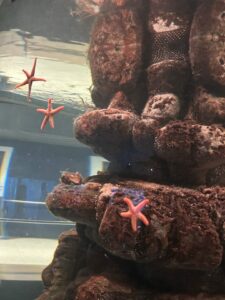
This definitely opened up my horizons to realizing just how diverse Canada was; we often just think of it as a little tundra and know it for the few creatures that it’s up north for; beavers, bears, and the Atlantic puffin. There’s a lot more than that, and it definitely includes some creatures that you’d find down south.
So if you’ve ever believed those “cold” stereotypes of Canada, think again. Come to the Montreal Bio Dome. It’ll open your eyes up fast.
But probably the most interesting creature that we encountered in this part of the “zoo” was THIS thing:
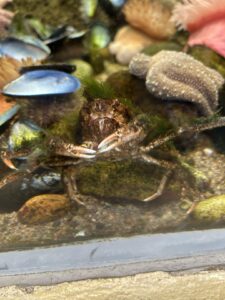
The cra looked mostly like a normal crab, except for the fact that it had all of this grass on its skin, which it used to mimic the environment in a mechanism called cryptic coloration, or camouflage. Obviously the reason for having a defense mechanism like this was not much of a surprise, but knowing that species this diverse were native to Canada was very much an eye-opening experience. I even got a video of the crab waving “hi” to me!
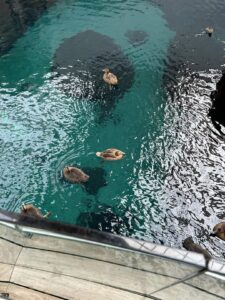
The remainder of the zoo included a few more starfish and a few native Canadian ducks.
It was pretty late by the time we emerged from the Bio Dome, so our parents took us back to the nearest metro station and decided to take us back to the hotel for now. As we sat there on the metro ride for the next thirty minutes, I went back through my phone’s camera roll, eagerly scrolling through dozens and dozens of pictures of all of the different species that the Bio Dome has to offer. It was a lot of different animals. While I have to say it doesn’t really compare to the monstrosity that is my nearby San Diego Zoo, it definitely was a transformative experience for me.
This definitely reminded me of how diverse the Canadian landscape truly is, and that it’s far more than just the arctic. There are thousands of different species (according to google search, between 80,000 and 140,000) that live in Canada, and while this place only scratched the surface of that, it definitely gave me an important lesson about Canada that I definitely won’t be forgetting anytime soon:
Canada is diverse.
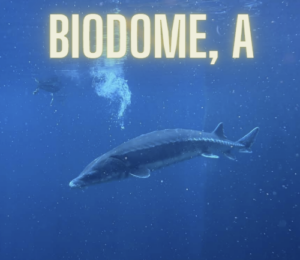
Rating for Experience #25, The Bio Dome, A
We arrived back at our hotel at around 5:30 PM and the remainder of the day was pretty chill. About an hour later, we went on another walk through the city of Montreal, this time with the intent of finding some dinner.
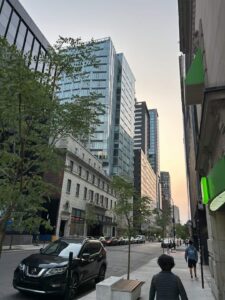
We ended up settling on a local sushi place called Chez Nagoya which was a short walk from our hotel and had some really high ratings. I took a few more scenery pictures while we were walking down the street:
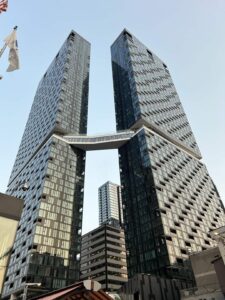
and entered the actual restaurant, which despite its popularity actually had a really small interior.
If you ever come to Montreal and want to try the sushi here, here’s the menu (sorry, the picture quality in the right half isn’t as good)
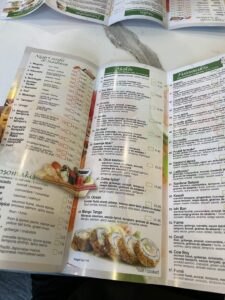
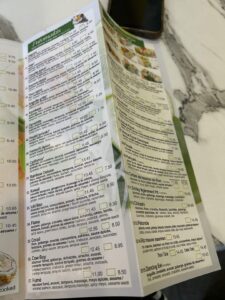
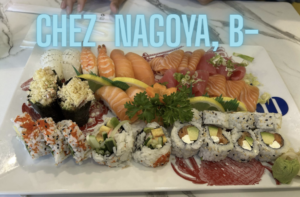
The sushi itself was really good, and there were a vast number of different flavors that we ended up eating. I definitely inhaled all of it quickly as soon as the meals came (I kind of forgot to write any notes down about the taste of this place) but I do remember that like any sushi place, it was definitely really tasty and enjoyable; I do have to comment, however, that there wasn’t anything about the vibe that made it completely memorable, so do keep that in mind if you ever come to Montreal.
Rating for Experience #26, Chez Nagoya, B-
And with that, our third full day of the trip to Caneda was officially over. Montreal had definitely proven to be one of the most memorable places I’d ever traveled to; there are so many different words that could be used to describe this place, but the four that stuck in my mind were: French, Skyline, Shopping, and Biodiversity. If you ever travel to Montreal, I promise these four themes will make it as memorable as any camouflaged crab.
Cody Nguyen
